

The point-of-sale inspection process is one of the headaches of buying and selling real estate in many cities throughout Northeast Ohio.
Whether you are selling your home in Cuyahoga County, Portage County, Lorain County, Lake County, Geauga County, or Summit County, OH (all areas where we buy houses quickly for cash), you may be required by local laws to complete a point-of-sale (“POS”) inspection before you are allowed to sell your home.
This article will focus on whether you can negotiate with cities over the items they list in their point-of-sale inspection report, with a focus on a specific case study of one such negotiation that I did recently.
If you want more information about point-of-sale inspection reports in general, including seeing what they look like, the types of items that cities ask you to repair, preparing for the inspection and similar helpful topics, check out our articles here and here.
If you want to know whether your city has point-of-sale inspections - not all cities do, and some are more limited than others in what they inspect - you can call the city’s building or housing department to ask.
We are building a resource here that lists numerous cities in the counties where we purchase and details whether they have a point-of-sale (POS) inspection and what it covers.
Why Would You Negotiate a Point-of-Sale Inspection in Ohio?
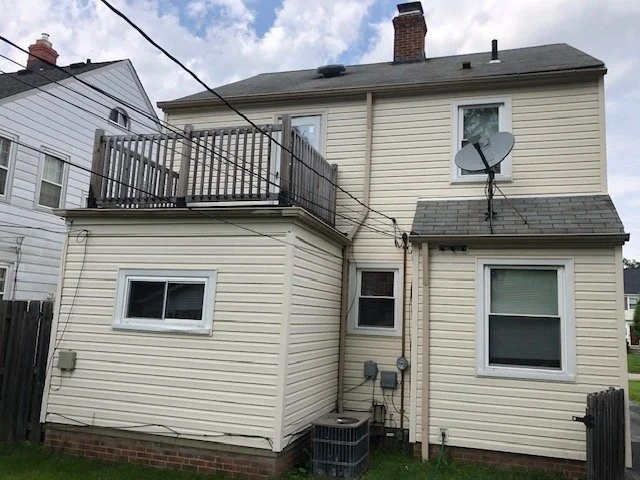
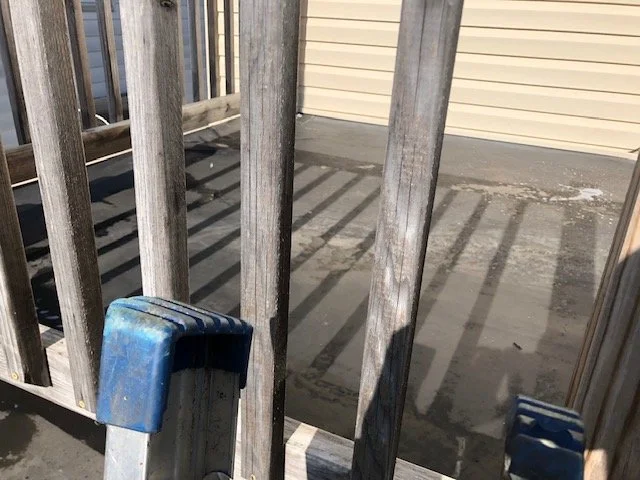
Porch Roof Dinged by POS Inpector Surrounded by Railing Above
To state the obvious, city inspectors are not perfect - they are human after all. Some inspectors know less about homes, construction, and repairs than others. They have good days when they are focused and do their job well, and they have bad days when they make mistakes.
Some inspectors care about how their reports will affect homeowners and will be more thoughtful about what they put in those reports. To others it is just a job, and they are not considerate about the implications of their report.
For these reasons, it is not uncommon to receive a report that contains repair requirements that are unreasonable. If that happens to you as it has happened to me many times, and the cost of the unreasonably requested repair that the city is asking you to make is quite high, you may want to try to negotiate.
Such a negotiation may not be successful. It will also require some effort and information gathering on your part. However, negotiation has saved me thousands of dollars so it can absolutely be worth it to try.
A Case Study in Negotiating an Ohio Point of Sale Inspection
I entered into contract for the purchase of a single-family home in University Heights, OH. The point-of-sale inspection was completed, and the inspector wrote the following (amongst many other things) in the report:
“Repair/Replace Flooring Second Floor Rear Porch So Water Does Not Collect and Properly Runs Off.”
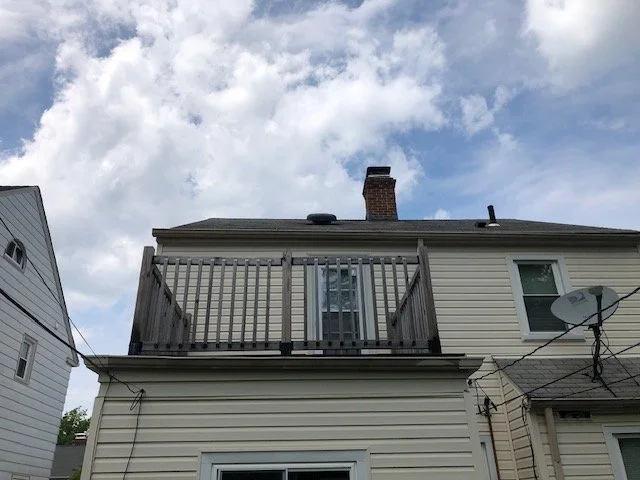
This is a picture of the rear porch flooring (which is also the roof over a little office below) that the inspector was referring to in his report:
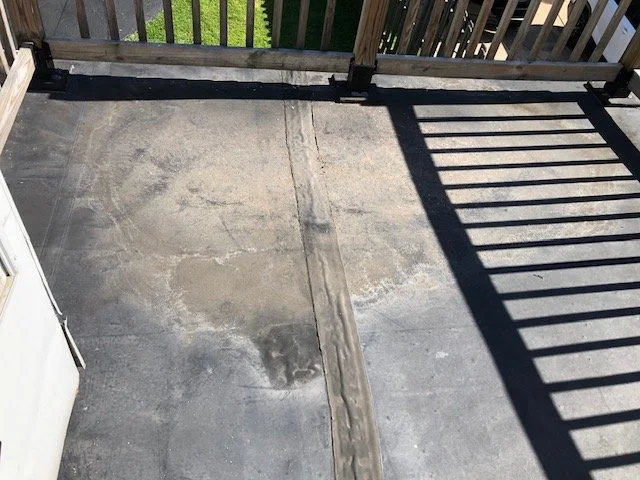
At the time of the inspection, it had just finished raining, and some water had collected on the surface of the roof and was not running off. You can see the outline of where the water later dried in the picture above.
I reached out to the inspector who prepared the report and pointed out that the roof was not leaking and was clearly watertight.
The inspector responded that he still wanted the water to run off from the surface and not pool anywhere. This requirement sounds reasonable. Water should ideally always run off roofs and into gutters.
However, these flat porch roofs are found on homes throughout the neighborhood and are not only made of material that is specifically designed to hold water and not leak, but by their very nature of being flat they can hold some water after rains.
Why It Can Be Appropriate to Negotiate an Ohio Point of Sale Report
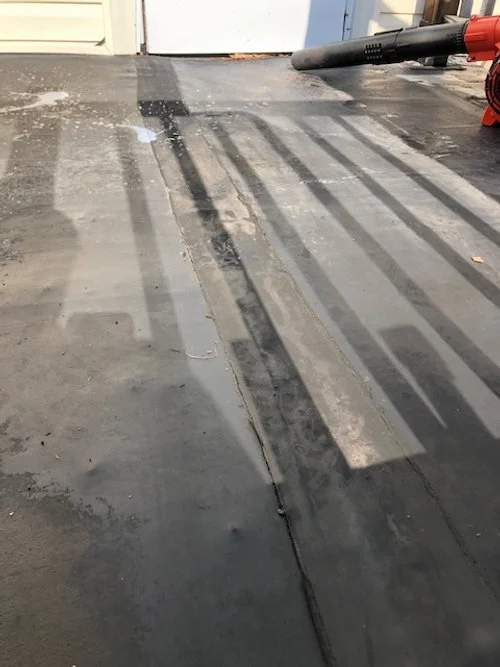
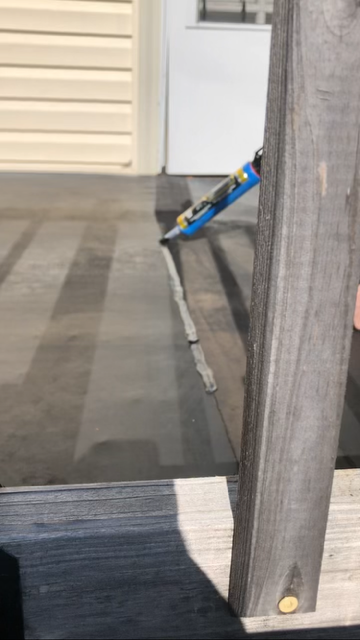
Seam of Porch Roof Which Was Resealed Using Simple Roof Caulking
Each person will have their own perspective about whether it is worth it to negotiate with an Ohio city over repair requirements in their POS report. For me personally, the decision is based on whether the repair request relates to something that (a) truly requires repair and (b) the cost of the repair.
I would of course not make a fuss about items that were legitimately in need of repair.
Additionally, even if I do not believe that an item in a point-of-sale report actually needs repair, if it is something simple that I could do for little or no cost, I would not make a fuss about it.
An example of this that I encountered in the same report for the property above was a dented piece of gutter downspout that I could easily replace.
In the case of the porch roof however, I believed that the roof both (a) did not need to be repaired, and (b) I confirmed through quotes that the cost to re-pitch the roof was high.
In such a circumstance, I believe it is appropriate to push back and negotiate.
How Do You Negotiate an Ohio Point of Sale Report?
To challenge the city’s repair request, I knew I would need a contrasting opinion from someone who (a) specialized in the repair at issue (i.e. a roofer) and (b) would be considered legitimate by the city.
Step 1 in Negotiating the Ohio Point of Sale: Get Professional Opinions
The first step in my negotiation process was to reach out to roofers who I knew were registered with the City of University Heights.
I did this to get a roofing specialist’s input on (1) whether a repair was truly necessary, (2) what they would do to repair the roof, and (3) how much it would cost.
I knew that it would be important to get the roofer’s opinion in writing so that I could easily share that opinion with city officials. To that end, I contacted a few different roofers, showed them the roof in person, and then sent them pictures of the roof by email to get an emailed response that I could share with the city.
In my case, the responses were exactly what I needed. For example, I received two separate emailed response from roofing contractors as follows:
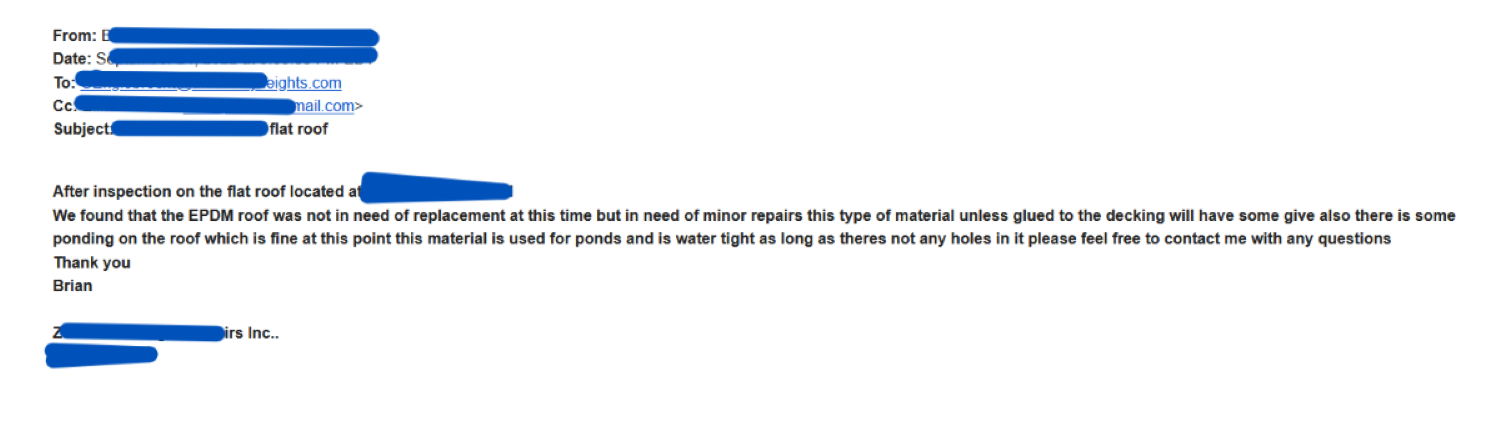
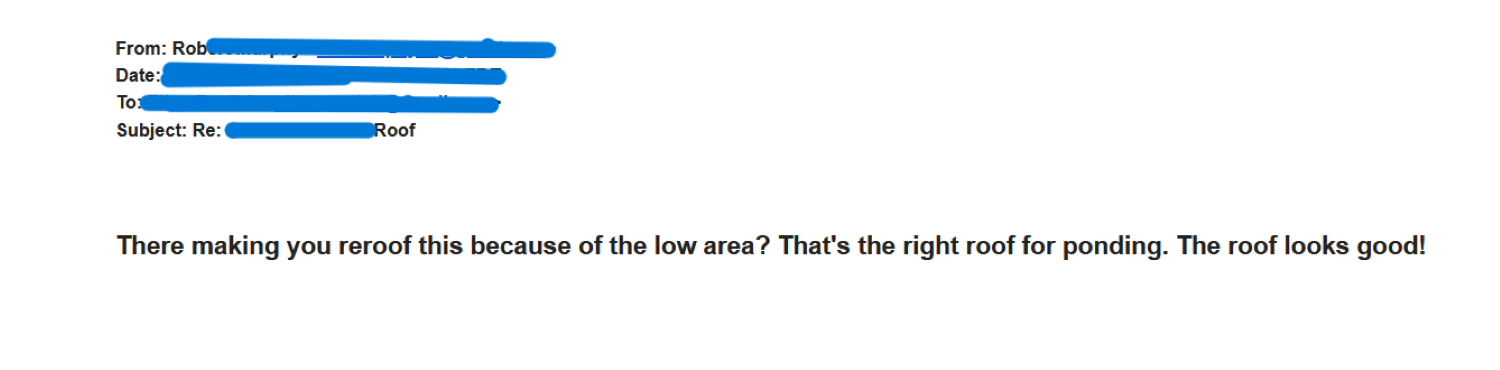
Pro Tip #1: While I met with roofers in person at the property, you could make the process more efficient by simply calling a few roofing companies, letting them know what the city is asking you to do and asking if you could email them pictures and get their opinion about what needs to be done and what it would cost.
This approach would not only save time but would also elicit a written response from the roofer, which you can then easily forward to the city if it is supportive of your position.
Pro Tip #2: You do not necessarily need to find contractors who are registered with the city.
The reason I reached out to registered roofing contractors (cities typically have a database of registered contractors that you can search) was because I knew that a housing department official might say something like, “we don’t have this contractor who is disagreeing with us in our system . . . they could be any joe shmoe or your friend, etc.”
A registered contractor is someone who has provided the city with insurance and a bond and is approved by the city to obtain permits. In my opinion, having someone like that who is contradicting the city’s POS report gives more legitimacy to my position.
Step 2 in Negotiating the Ohio Point of Sale: Who Should You Contact First?
Now that you are armed with an expert opinion (or hopefully multiple) that back up your negotiating position, I would suggest taking two different approaches depending on whether the point-of-sale report was written up by (a) a city employed staff inspector or (b) an inspector from an outsourced inspection company.
Ohio Point-of-Sale Report Written by City Staff Inspector
If the point-of-sale inspection was completed by an inspector employed by and working in the city’s building department, I would initially attempt to communicate directly with this inspector.
The reality is that city staff who work in the city’s building department day in and day out are more invested in the city and its residents than outsourced inspectors who may live in an entirely different city, may be working on a contract-basis, and who have no long-term personal connection to the neighborhoods they are inspecting.
City staff inspectors frequently live in the same city where they are conducting inspections. They see the city’s residents around them frequently both in government buildings and when driving around doing their work. When they are off duty, they may bump into residents whose homes they have inspected. Ultimately, for city staff inspectors, the city’s residents are often their neighbors and their community.
I believe that these personal connections create a degree, however small it may be, of influence and leverage for the homeowner who is subject to a POS. That influence/leverage has the potential to lead to a more favorable result through direct communication and complaint to the city staff inspector who did the inspection and completed the report.
Ohio Point-of-Sale Report Written by Outsourced Third Party
If the point-of-sale report is written by an inspector from an outsourced company hired by the city to conduct the city’s POS inspections (many cities in northeast Ohio are using SAFEbuilt and other third party inspection companies), I would not initially try to communicate directly with the outsourced inspector who completed the inspection and prepared the POS report.
I would instead first reach out to a city staff inspector to discuss my concerns.
My rationale is the exact opposite of why I would communicate directly with a city-staff inspector:
(1) The outsourced inspector does not have the same commitment to the city and its residents as a city-staff inspector;
(2) Outsourced inspectors do not always live in the city where they conduct their inspections, it is not their community, and they are likely to take a colder and less flexible approach that does not recognize gray areas or consider options that are better for the homeowner; and
(3) Outsourced inspectors may tend to look at their work more like it is just a job and may not have the same incentives for building long-term rapport with city residents or building a reputation of fairness in the community.
By speaking to a city staff inspector regarding concerns about the outsourced inspector’s report, you tap into the influence/leverage I described in the previous section.
Moreover, I have had city staff inspectors say things like, “Yeah, these guys from SAFEbuilt can sometimes be a bit aggressive in their reports” and similar statements. Those types of acknowledgments already put you in a better position when negotiating your POS report.
Essentially, you are giving the city staff inspector, who may care more about the community, the opportunity to be "the good guy” who brings fairness to the situation.
Why I Would Not Start Higher Up the Ladder
You may have a desire to go over the city inspector’s head to their boss, which is in many cases the city’s building commissioner.
I believe this approach would be a mistake for the initial communication at least, regardless of whether an outsourced inspector or a city-staff inspector produced the POS report.
If you start by going over the inspector’s head directly to their boss, two things will likely happen: (i) the commissioner will say that the inspector is experienced and knows what he/she is doing and will be less willing to hear your case, and (ii) the inspector will be frustrated with you for complaining about them to their boss.
You want the city inspector to be your advocate in front of the commissioner, not someone with a grudge against you.
If you have a positive initial conversation with the city inspector and present a good case for the change you want, they are far more likely to advocate on your behalf when they talk to the commissioner about making the requested change.
The commissioner is also far more likely to be open to the change if their own staff inspector is saying that the change makes sense.
Step 3 in Negotiating the Ohio Point of Sale: What Should You Say?
Armed with written support from one or more contractors, you need to present your case to the inspector.
To state the obvious, you should avoid accusatory or derogatory comments about the report and focus on the facts and your specific request.
Something like the following is what I said during an in-person meeting with the city staff inspector at the property:
“Thanks very much for taking the time to meet with me. I wanted to discuss one item in the POS report that I was confused about.
I was confused when I saw the request to repair or replace the flooring on the second-floor porch. I know that roof doesn’t leak and the material is a waterproof roofing membrane that is designed to hold water.
However, I wanted to make sure I wasn’t missing something, so I reached out to three different roofing contractors registered with the city, shared the POS report with them and had them take a look at the roof. They all said that the roof was completely fine and did not need repair or replacement. I brought some of their emails with me, but they also offered to speak directly with you if that would help.
Is there any chance you would be willing to reconsider this one item since multiple professional roofers are saying there is nothing wrong with it? I will take care of everything else requested in the report.”
What Results Can You Expect When Negotiating an Ohio POS?
In the situation above, I got a few quotes to repair or replace the porch roof and satisfy the specific requirement in the city’s report that, “water does not collect and properly runs off.”
The options were expensive because to get water to fully run off of the roof, the roof needed to be re-pitched at a slight angle. There are special materials that could be added to the existing flat roof to give it that pitch, or I could simply put a new roof on with the appropriate pitch. The lowest cost quote I received was $2,500.00.
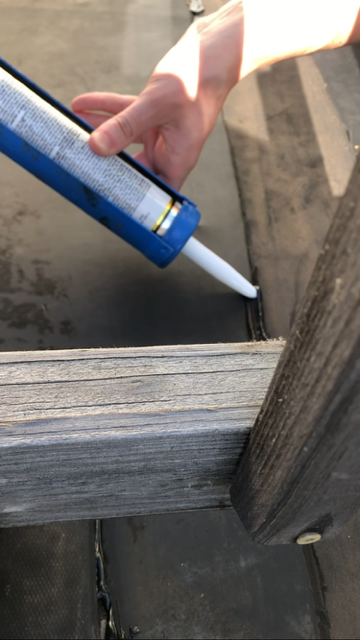
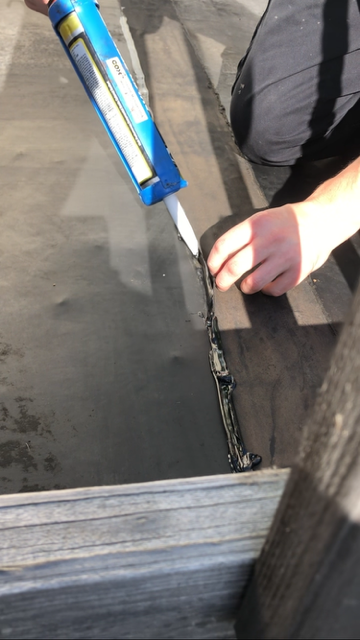
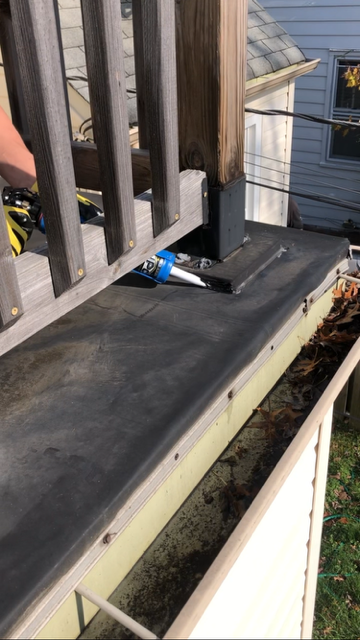
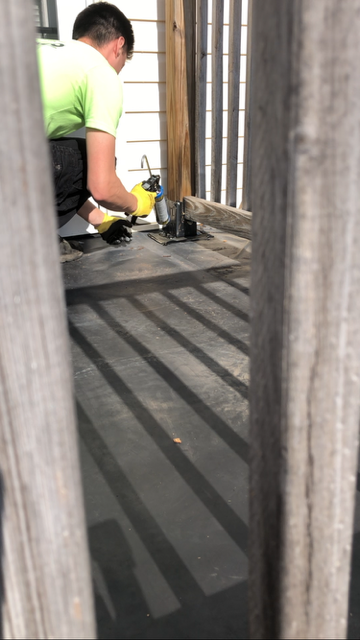
However, by negotiating in the manner I described above and showing the city that multiple city-registered roofers firmly believed the roof did not need to be repaired, the city agreed to allow me to simply reseal the roof seams with a tube of roof sealant.
They then verified that this basic work had been done and waived their original requirement that water had to “properly run off” the roof and could not pool anywhere on the roof’s surface.
While the negotiating did take some time (collecting quotes, communicating with roofers and the city), the savings was substantial.
